Blog
- Todas
- Ingeniería
- Subvenciones
- Tecnología Interledger
- Noticias
- Política e Incidencia
- Liderazgo Intelectual
44 resultados
No results found. Please adjust your keyword search or filter settings.
Search is unavailable right now. Showing all posts instead — please try again later.
-
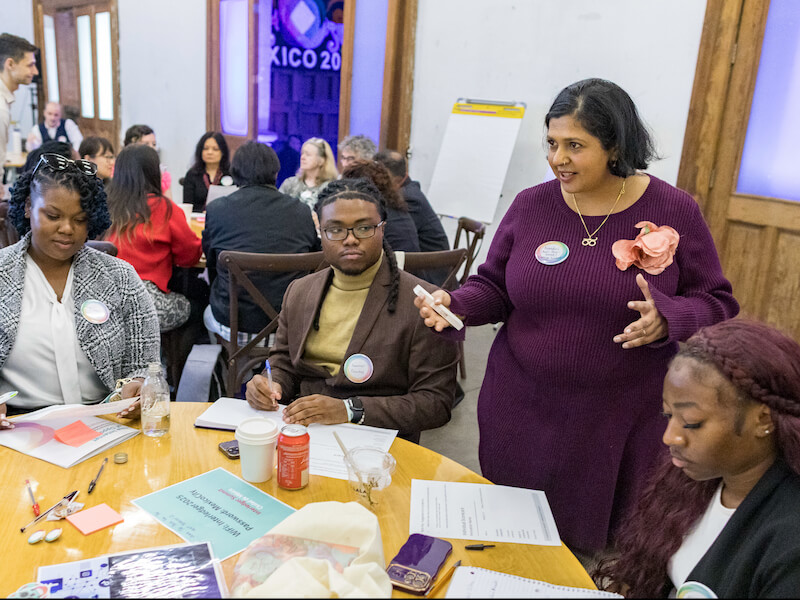
Why We Funded Research Into Who Gets Left Out of Instant Payments
Research across more than 20 countries found that instant payment systems often aim for inclusion but are designed in ways that exclude smaller financial providers through governance, regulatory, economic, and technical barriers.
 6 min de lectura
-
Why Campuses are Becoming Testbeds for Digital Finance
Universities like Bowie State University are becoming key testing grounds for inclusive digital finance, where students with lived experience of financial exclusion help design more equitable systems. Its partnership with the Interledger Foundation shows how education and community engagement can shape the future of accessible financial infrastructure.
 8 min de lectura
-
You Don’t Need 3 Apps to Pay Your Friends: Why U.S. Payments Feel Broken
U.S. digital payments feel fragmented because apps don’t interoperate, forcing users to juggle multiple platforms.
 4 min de lectura
-
Designing Digital Money: A 2026 Blog Series
Digital money is no longer just emerging—it is being intentionally designed. Universities are becoming key environments for shaping the future of financial systems, training the next generation of technologists, policymakers, and innovators. As digital finance evolves, academic institutions play a critical role in researching, testing, and teaching equitable, secure, and interoperable systems, with support from initiatives like those of the Interledger Foundation.
 4 min de lectura

-
Why We Weighed In on the Federal Reserve’s Payment Account Proposal
Interledger Foundation advocates for inclusive, secure, and low-cost direct Fed payment access for non-banks.
 5 min de lectura

-
Africa Doesn't Have a Payments Technology Problem. It Has a Business Model Problem.
Africa’s payment systems struggle not because of missing technology but because of flawed business models and commercial design. To achieve adoption, systems must prioritize free P2P transfers, better accessibility, and simple proxy-based addressing, alongside regulatory reforms that overcome incumbent resistance.
 4 min de lectura

-
The Web Isn’t Free
The internet isn’t truly free: we “pay” with our time, attention, and data, which fuel platforms designed to capture and manipulate us. Alternatives like Web Monetization aim to restore privacy, fairness, and control by letting users directly support creators.
 5 min de lectura

-
What’s Happened in December
As we come to the end of the year and review the past 2 months, we see that we have continued to make a significant impact in helping to close the financial exclusion gap worldwide. The surge in digital financial services is a major enabler as we continue to adopt services such as mobile banking, mobile money accounts, internet banking, and digital payments. Many have called this period a breakthrough moment for financial inclusion.
3 min de lectura
-
Open by Design: Confronting Harmful Patterns in Digital Finance
Interledger Ambassador Caroline Sinders warns that harmful or manipulative design patterns in digital finance can exploit vulnerable users and undermine trust, calling for transparent, user-centered, and inclusive design standards to ensure ethical financial technology.
5 min de lectura
-
Reimagining e-commerce and social media
ILF Ambassador Gavin Chait envisions a federated, community-led e-commerce model through Hop Sauna that empowers creators with autonomy, inclusivity, and interoperable payments—reimagining online commerce and social media as decentralized and equitable spaces.
4 min de lectura
Mantente al día
Suscríbete a nuestro boletín y mantente al día con nuestras noticias y eventos.